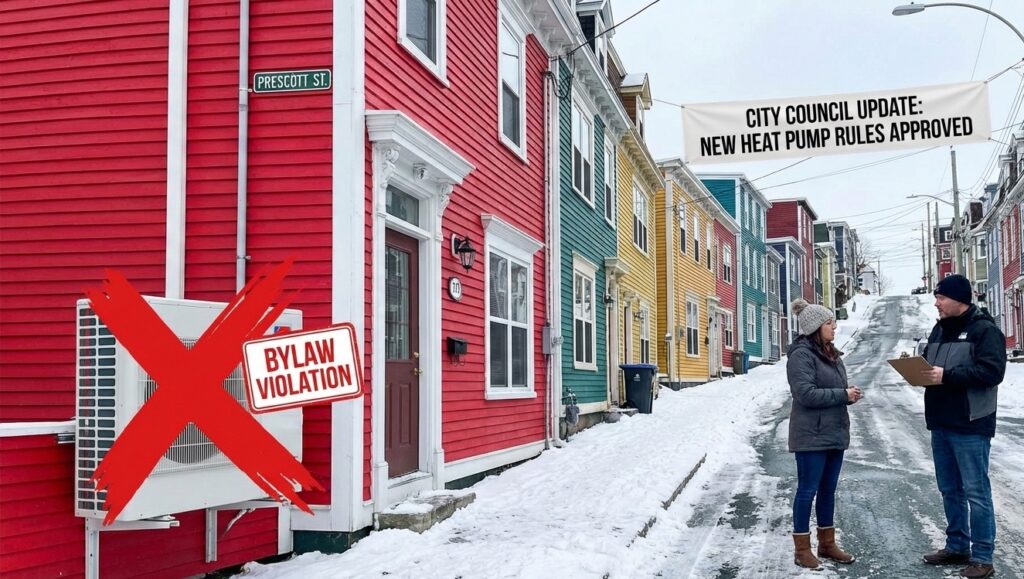
If you’ve been following the local news in Newfoundland lately, you’ve likely heard about the stir on Prescott Street. It’s a story that has gone viral across the province and sparked conversations nationwide about the delicate balance between modern energy efficiency and historic preservation.
At the center of the storm? A humble mini-split heat pump.
For years, homeowners in historic districts have struggled with strict bylaws regarding where they can install these energy-saving units. But thanks to a recent decision by the St. John’s City Council, the tide is turning. Here is everything you need to know about the upcoming bylaw overhaul and what it means for your home comfort.
The Spark: A Prescott Street Controversy
The conversation exploded recently following a complaint about a heat pump installed on the front of a heritage property on Prescott Street. Under the city’s current bylaw, the rules were rigid: heat pumps, mini-splits, and air conditioners were generally restricted to the side or rear of a property.
This rule created a massive headache for row house owners or those with limited side access. In many cases, the “side or rear” rule made it impossible to install a unit without complex, expensive routing—or made it impossible, period.
The complaint forced a debate: Should we prioritize the uninterrupted aesthetic of a heritage facade, or should we allow homeowners the right to affordable, efficient heating?
The Verdict: Common Sense Wins
In a move that is being hailed as a win for homeowners, the City of St. John’s has decided to scrap the current restrictive bylaw and replace it with a new, more flexible set of regulations.
According to Ken O’Brien, the Chief City Planner, the goal is no longer to ban front-facing units entirely, but to ensure they are installed thoughtfully.
The Key Takeaways of the New Proposal:
-
Front Installation is Possible: The new intent is that a heat pump can be installed anywhere—including the front of a building—provided it does not obscure “character-defining elements” of the heritage structure.
-
Smart Placement: There are almost always ways to position a unit so it respects the architecture while still providing efficient heating.
-
Grandfathering: If you already have a device installed that doesn’t fit the new rules, don’t panic. The city has confirmed that existing devices will be grandfathered in.
Why This Is a Viral Success Story
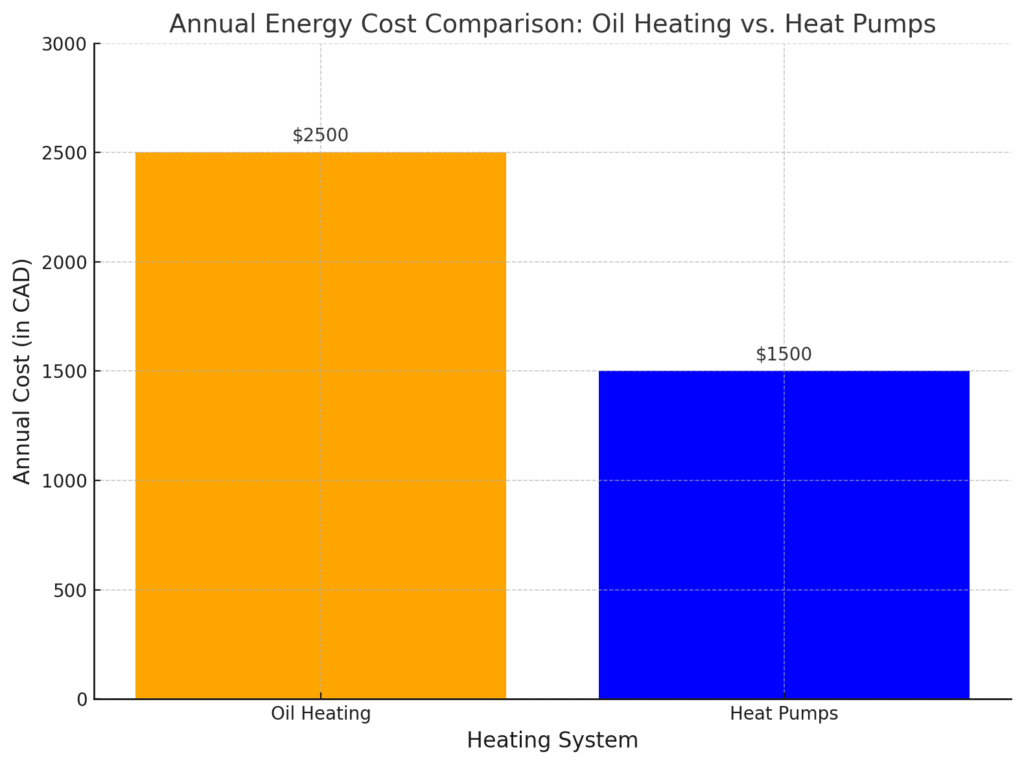
This story resonated with so many Canadians because it represents a victory for modernization. We all love the charm of our historic Jellybean Row houses and heritage districts, but we also know the reality of heating them. These homes can be drafty and expensive to heat with oil or baseboards.
Allowing mini-splits on the front of buildings (tastefully done) means more residents can ditch expensive fossil fuels and switch to green, affordable electric heat without being blocked by red tape.
What This Means for You
If you own a heritage home or a property in downtown St. John’s and were previously told “no” because you didn’t have a backyard or side yard—it’s time to look again.